
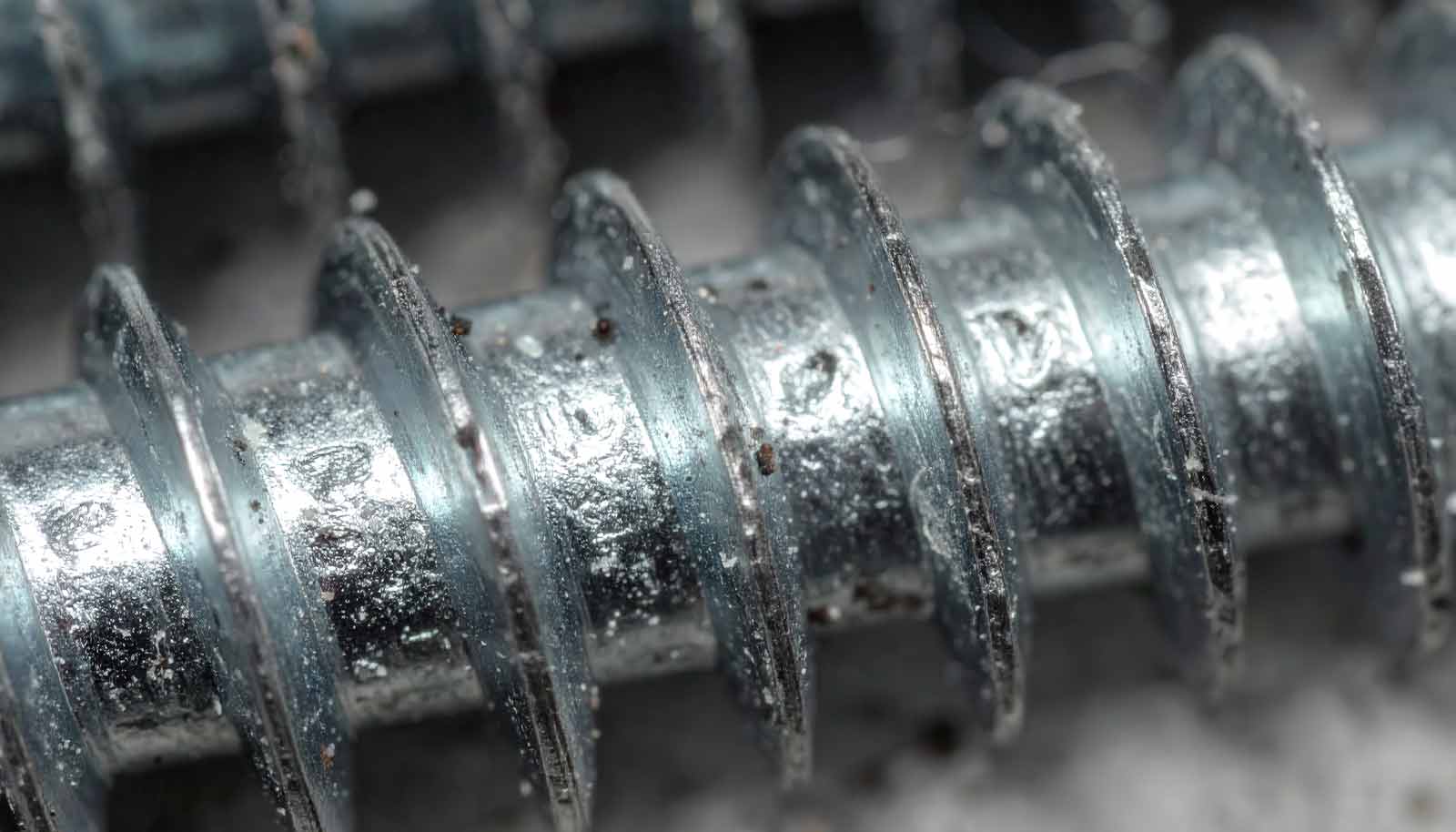
Concrete has been the default foundation for garden structures for decades — dig a hole, mix a bag of Postcrete, wait two days, hope it’s level. Ground screws have quietly upended that routine. A galvanised steel shaft with helical blades, screwed directly into the ground in minutes, offering the same load-bearing capability with a fraction of the labour. If you’re planning a shed, decking, garden room, or pergola, it’s worth understanding how they work before you reach for the cement bag.
This guide covers what ground screws are, where they work well, where they don’t, and what to think about before buying. There’s also a size selector tool below to help you identify the right specification for your project — and a site readiness checker in the next section.
In This Guide
What Are Ground Screws?
At its simplest, a ground screw is a heavy-gauge galvanised steel shaft with one or more helical plates (blades) welded around it. Those blades do two things: they help the screw bite into the soil during installation, and once in the ground, they create anchoring points that resist both downward load and lateral movement. The top of the shaft carries a mounting head — either a flat plate, a U-bracket, or an adjustable post collar — which connects directly to your timber frame, joist system, or post.
Sizes typically run from 550mm for lightweight structures on firm ground up to 1,400mm for heavier garden buildings or sloping or soft sites. Diameter varies too — 68mm is the most common for residential use, whilst wider shafts are used for commercial applications. The key variable is always the relationship between the structure’s load, the soil type, and the depth of penetration.
What Can They Be Used For?
The most common applications are shed bases, garden decking, garden rooms and log cabins, pergolas, and fence posts. For a standard 6×4ft shed on reasonably firm ground, four 550mm screws at the corners will typically be sufficient. Larger structures — a 5×4m garden room, say — will need eight or more longer screws, and the load calculations become more important. Decking is arguably the ideal use case: the screws create an instantly level grid of fixing points, and the raised base improves airflow beneath the boards, reducing rot risk.
Beyond garden structures, ground screws are used for temporary event platforms, fencing (particularly useful near tree roots where concrete would damage root systems), raised vegetable planters, play equipment, and even small commercial modular buildings. Building regulations in some areas specifically mandate ground screws rather than concrete where protected tree roots or environmentally sensitive ground is involved.
Lightweight
- Garden sheds (up to 6×4ft)
- Pergolas and canopies
- Fence posts
- Raised planters
Mid-weight
- Large sheds (8×6ft+)
- Standard decking
- Greenhouses
- Play equipment
Heavier structures
- Garden rooms and studios
- Log cabins
- Hot tub decking platforms
- Small modular buildings
Ground Screw Size Selector
Find the right length and quantity for your project
See some of our contractors which are specialised in Builder


Advantages Over Concrete
The speed difference is the most immediately obvious benefit. Concrete post foundations typically mean digging holes, mixing and pouring, then waiting at least 24 hours before any load can be applied. Ground screws are structural the moment the last one is in the ground — there’s no curing period. For a standard shed base, the entire installation can be done in a couple of hours by one person with a ratchet bar or cordless driver. One industry reference suggests ground screws can be installed 60–70% faster than equivalent concrete foundations.
There’s also far less mess. No soil excavation, no wet concrete mix, no spoil to dispose of. For garden projects where lawn or borders need to stay intact, that matters considerably. Ground screws leave the surrounding ground largely undisturbed, which is why they’re increasingly specified in areas near mature tree roots — concrete trenches can cause significant root damage, and some local authorities and tree officers now require screw-pile foundations near protected trees.
Adjustability during installation is another genuine advantage. If a screw goes in slightly off-level, you unwind it, reposition, and drive it again — something that’s simply not possible once Postcrete has gone off. And at the end of the structure’s life, ground screws can be extracted and the site returned to grass. From a sustainability standpoint, the carbon footprint of producing ground screws is considerably lower than casting an equivalent volume of concrete.
✓ Ground Screws Excel At
- Fast installation — ready to build on immediately
- Sloping or uneven ground
- Sites near tree roots
- Minimal ground disruption
- Fully removable and reversible
- DIY-friendly on most residential jobs
⚠ Situations to Watch
- Rocky or heavily stony ground
- Very waterlogged / peat-heavy soil
- Structures needing building regulations sign-off
- Sites with unknown underground services
- Extremely heavy structures (over 5 tonnes)
- Ground that has been recently disturbed / backfilled
Limitations and Drawbacks
The most common failure scenario is installation into ground that hasn’t been assessed properly. Very soft, waterlogged, or peaty soils reduce the skin friction that gives a ground screw its load-bearing capacity. In those conditions, a longer screw or a higher screw count is needed — and in extreme cases, the ground may simply not be suitable at all without ground improvement work first. Rock or rubble close to the surface can make screwing impossible or result in a tilted installation, which significantly reduces load capacity.
Cost can also be a factor, though it’s often misunderstood. The screws themselves — typically £15–£50 each depending on size, plus brackets — can appear more expensive upfront than a bag of Postcrete. But once you factor in the time saving, the lack of plant hire, and the absence of disposal costs for excavated spoil and concrete waste, the overall project cost is often comparable or lower. For larger garden rooms, professional ground screw installation typically runs £400–£1,200 depending on the number of screws and site conditions.
One area where ground screws can create complications is building regulations. For structures that require Building Regs approval — garden rooms over 15m², for instance, or anything with sleeping accommodation — the foundation engineer will need load calculations and potentially a soil survey. Ground screws are fully acceptable under Building Regs, but you need the paperwork. If you’re in any doubt, a brief conversation with your local authority building control team before you order is time well spent.
Site Readiness Checker
Tick every condition that applies to your site before buying
See some of our contractors which are specialised in Builder
DIY vs Professional Installation
For a standard shed base or modest decking run on reasonably flat ground, self-installation is genuinely achievable. The basic toolkit is simple: a ratchet installation bar (or SDS-plus adaptor for a cordless drill), a magnetic spirit level, and some string lines to keep your layout square. Most suppliers include installation guidance with the screws, and the forgiving nature of the process — easy to correct a tilted screw, easy to adjust heights before you fix off — means a careful DIYer will get good results. Allow a full day for a shed base and a weekend for a modest decking project if you’re new to it.
The case for professional installation strengthens as projects grow in size and complexity. A garden room with eight screws on a sloping site, for instance, requires precise datum-setting and level transference across the whole footprint — errors here compound through the entire build. Professionals typically use powered installation machines that drive screws more consistently vertical and to the correct torque, which matters for load calculations. If Building Regulations approval is involved, a professional installer can also provide the documentation and load data your building control officer will need.
Mark out and check for services
Set out your screw positions with stakes and string. Before touching the ground, scan the area with a CAT detector and request utility maps from LSBUD.
Identify your datum point
Find the highest point in your footprint and install the first screw there. This becomes your reference height for all subsequent screws.
Drive screws vertically
Use your magnetic level throughout installation. A tilted screw is significantly weaker than a true vertical one — take your time here.
Level across the grid
Work from your datum outwards, using a spirit level or laser level to transfer height across all positions. Adjust by winding slightly in or out.
Fix off brackets and build
Once all screws are level and vertical, attach your brackets and begin your timber frame or joist system. The foundation is structural immediately.
Frequently Asked Questions
Are ground screws suitable for all soil types?
Ground screws work well in most soil conditions including clay, loam, and moderately sandy soils. The helical blades create mechanical anchoring through skin friction, which holds up well in clay-heavy ground in particular. Very soft, peaty, or permanently waterlogged soils can reduce load capacity, requiring longer screws or a higher screw count. Heavily stony ground or shallow bedrock can make installation impossible without prior ground preparation. If you’re in any doubt about your soil, a trial installation with a test screw is a sensible first step.
Do I need planning permission to use ground screws?
Planning permission is determined by the structure being built, not the foundation type used. A shed or decking that falls within permitted development rules doesn’t require planning permission regardless of whether it sits on concrete or screws. Ground screws do not change that calculation. What can be relevant is Building Regulations approval — required for garden rooms over 15m² or structures with sleeping accommodation. In those cases, ground screws are acceptable but the engineer will need load data and potentially a soil assessment.
How long do ground screws last?
Ground screws are manufactured from galvanised steel, and quality products from reputable suppliers typically carry a design life of 25 years or more. The galvanisation protects against corrosion in normal UK soils. Highly acidic or contaminated soils can accelerate corrosion, so it’s worth checking the pH of your ground if you’re in an area with heavy clay or industrial history. Stainless steel options are available for particularly aggressive ground conditions, though at a higher cost.
Can I install ground screws myself, or do I need a professional?
Most smaller residential projects — standard sheds, modest decking, fencing — are well within DIY capability using a ratchet installation bar or cordless drill with the appropriate adaptor. The key skills needed are accurate layout, consistent vertical installation, and levelling across the grid. Larger or more complex projects — garden rooms, multi-level decking, sloping sites — benefit from professional installation because powered equipment ensures more consistent results, and the cost of a poorly-installed foundation on a substantial build is significantly higher than the installer’s fee.
Can ground screws be removed if I change my mind later?
Yes — this is one of the genuine advantages over concrete. Ground screws can be extracted by reversing the installation process, leaving the surrounding ground largely undisturbed. This makes them particularly useful for structures that might need to move, for rented properties, or for situations where planning conditions require the site to be returned to its original state. Concrete foundations, by contrast, require excavation and disposal to remove.
How much do ground screws cost compared to concrete foundations?
Individual ground screws typically cost £15–£50 each depending on size, plus brackets at £5–£20 each. A four-screw shed base kit might cost £80–£180 in materials. Concrete foundations appear cheaper per unit but require more time, labour, tools, and produce waste to dispose of. For professional installation, ground screws typically run £400–£1,200 for a garden structure depending on screw count and site conditions, which is broadly comparable to a professionally installed concrete base once groundworks are factored in.
Need a Builder or Groundworker? Find One Near You — Zero Commission
TraderStreet connects you directly with local builders, groundworkers, and garden structure specialists. No platform fees layered onto quotes. Compare profiles, read reviews, contact directly.
Find a Local Builder →