

The first mild weekend in late February is one of gardening’s quiet pleasures — that moment you step outside and realise the soil has softened, the snowdrops are already past their peak, and the garden is quietly demanding your attention again. Spring is the season that sets the tone for everything that follows. Get the basics right between February and May and you’ll spend summer maintaining a thriving garden rather than firefighting neglect.
This guide covers the essential spring tasks, the tools worth investing in, and the habits that make garden maintenance genuinely manageable rather than a chore you put off until it becomes overwhelming. Whether your garden is a compact urban terrace, a rambling rural plot, or a productive vegetable patch, the fundamentals are the same — timing, preparation, and working with what the season offers.
You won’t find year-specific advice here. Good spring gardening practice doesn’t change from one year to the next; the principles that worked for your grandmother’s plot still apply. What changes is your own garden — its soil, its aspect, its specific plants — and learning to read those signals is the real skill.
In This Guide
What Spring Actually Demands of Your Garden
Early spring, roughly February and March, is a period of cautious preparation. The soil is still cold, frost remains a real possibility across most of the UK, and any tender growth that emerges prematurely will be punished for it. Your job in this phase is to clear, prepare and set foundations — cutting back last year’s dead material, turning compost heaps, servicing tools, and getting structure back into beds and borders without disturbing anything that might still be dormant beneath the soil surface.
Mid spring, April in most parts of the country, is when the garden accelerates. Soil temperatures rise past the critical 7°C threshold that triggers meaningful plant growth, and suddenly everything seems to need doing at once. This is when lawns need their first proper feed, when weeds begin germinating in earnest, and when seeds can actually be trusted to germinate reliably outdoors. It’s also the period when getting ahead of problems — applying a pre-emergent weed treatment, netting brassicas before the cabbage whites arrive, staking tall perennials before they lean — saves an enormous amount of corrective work later.
Late spring, May, is the most optimistic month in the gardening calendar. The last frost date has passed for most lowland gardens, summer-flowering bulbs are going in, and the vegetable plot is full of seedlings that need managing rather than coaxing. It’s also the month when a few hours’ work each week genuinely suffices — if you’ve done February and April properly.
The Essential Spring Toolkit
The best gardening tools are the ones you actually reach for. That sounds obvious, but it’s a genuinely useful principle when deciding what to buy: a tool you don’t enjoy using will sit on the shelf whilst the job waits. Quality matters far more than quantity. A stainless steel border spade from a reputable British manufacturer — Bulldog, Sneeboer, Burgon & Ball — will last thirty years and feel noticeably better in use than a budget equivalent after the first hour of digging.
The case for investing in hand tools is particularly strong. They’re used every session, they handle with more precision than powered alternatives, and they genuinely improve with a little maintenance — a sharpened hoe blade, a drop of linseed oil on a wooden handle, a quick wipe-down before hanging up. Treat them well and they outlast the garden itself.
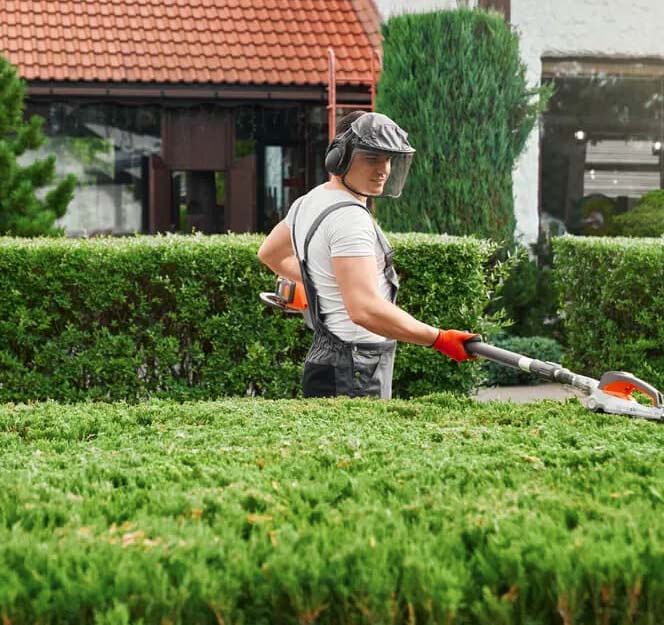
Powered tools — lawnmowers, scarifiers, hedge trimmers — are worth the outlay for larger gardens but unnecessary for modest ones. The decision point is roughly 100m² for lawns: below that, a push cylinder mower is quieter, gives a better cut and requires less maintenance than a rotary. Above it, a petrol or battery-powered rotary becomes a genuine time-saver.
Starting Out (£50–£150)
- Hand trowel and fork set
- Bypass secateurs
- Bamboo rake
- Watering can (7–9 litre)
- Kneeling pad
Established Garden (£150–£400)
- Border fork and spade
- Long-handled hoe
- Half-moon edger
- Bypass loppers
- Garden hose with lance
Serious Gardener (£400+)
- Full stainless steel tool set
- Powered scarifier
- Quality cylinder mower
- Soil pH and temperature meter
- Cold frame or greenhouse
Spring Task Planner
Select your garden type and the time of spring to get your priority to-do list
See some of our contractors which are specialised in Gardening


Bringing Your Lawn Back to Life
The single most common mistake gardeners make with lawns in spring is mowing too short too soon. Cutting a lawn down to 2cm in early April, before it has properly recovered from winter dormancy, stresses the grass at exactly the moment it should be building energy reserves. Keep your first few cuts of the season at 4cm or higher, and only drop to your preferred summer height once the lawn is growing strongly and consistently. This one habit makes a material difference to how the lawn looks from June onwards.
Moss is the other perennial spring concern. It thrives in the conditions that typify British winters — shade, moisture, compacted soil — and by the time spring arrives, significant patches are common in most gardens. The important thing is to address the underlying cause, not just the moss itself. Applying ferrous sulphate treatment kills the moss visibly (it turns black within a fortnight), but if you don’t follow up with aeration, overseeding and possibly a shade assessment, the moss will return the following winter just as enthusiastically. According to research from the Royal Horticultural Society, poor drainage and compaction are the primary causes of persistent lawn moss, and both are entirely fixable.
Scarifying — removing the layer of dead organic material (thatch) that builds up between grass plants — is the spring task most people either skip or overdo. A light going-over with a spring-tine rake in mid-April is sufficient for most lawns. Aggressive mechanical scarifying every year can weaken the grass, particularly on sandy soils. If your lawn has more than 1cm of thatch when you push a finger through the surface, a proper scarify is warranted; otherwise, a rake is enough.
Beds, Borders and Soil Health
Soil health is a phrase that gets used a great deal in contemporary gardening, but what it actually means in practical terms is relatively straightforward: can plant roots move freely through the soil, does it retain moisture without becoming waterlogged, and does it contain enough organic matter to support plant growth? Most UK garden soils, particularly those that have been worked for years without much compost addition, will score poorly on at least one of these measures. The fix is the same in every case: organic matter.
A 5cm layer of well-rotted garden compost or bark mulch applied to beds and borders in late March or April does multiple jobs simultaneously. It suppresses weed germination by blocking the light that weed seeds need to sprout, it improves moisture retention during dry spells, it gradually improves soil structure as worms pull it downwards, and it gives the border a clean, cared-for appearance that lasts months. The Garden Organic organisation recommends mulching as one of the most impactful single actions available to gardeners of any experience level.
Weeding in spring requires a slightly different mindset from summer weeding. Rather than chasing established weeds around the border, spring is the moment to prevent germination in the first place. A sharp hoe across the surface of a dry bed on a warm afternoon in April, before you can even see many weeds emerging, kills thousands of weed seedlings that would otherwise establish over the following fortnight. This “hoe early and often” approach, practised consistently through April and May, dramatically reduces the weeding burden from June onwards.
✓ Signs Your Soil Is Ready to Work
- Forms a ball in your fist but breaks apart easily with a finger
- Surface has dried after winter waterlogging
- Worms visible when you push a trowel in
- Temperature above 7°C at 5cm depth
⚠ Signs to Wait Longer
- Soil sticks to your boots and tools in clods
- Surface is still waterlogged or frozen in the morning
- Footprints remain depressed rather than springing back
- Soil feels cold and heavy throughout — not just on the surface
Pruning in spring is more time-sensitive than most gardeners realise. The broad rule is that shrubs which flower before midsummer should be pruned immediately after flowering (so you don’t accidentally remove this season’s buds), whilst shrubs that flower after midsummer can be cut back hard in early spring without affecting their display. Roses are a partial exception — they benefit from a light prune in early spring to remove dead wood and open up the centre, regardless of flowering time. The RHS pruning guide is the most reliable quick reference for specific plants.
Garden Tool Recommender
Get a personalised tool list based on your garden size and main focus area
See some of our contractors which are specialised in Gardening
Getting the Vegetable Plot Ready
Soil preparation is the foundation of a productive vegetable garden, and spring is the window to do it properly. If your plot wasn’t cleared and mulched in autumn, now is the time to remove any overwintered weeds (roots and all — half-measures encourage regrowth), incorporate a generous layer of compost, and allow the soil to settle for a fortnight before sowing. Rushing this step — sowing into inadequately prepared ground — is one of the most reliable ways to produce disappointing results despite doing everything else correctly.
Raised beds have become almost standard for home vegetable growing, and with good reason. They warm up faster in spring than ground-level beds (a meaningful advantage in the UK climate), drain freely, and can be given the ideal growing medium from the outset rather than working with whatever your native soil happens to be. If you’re building or refilling raised beds this spring, a mix of two-thirds topsoil to one-third well-rotted compost is a reliable starting point for most vegetables.
Seed sowing timings are the aspect of vegetable growing that causes most confusion. The key distinction is between what can go directly into the ground outdoors, what needs to be started undercover and transplanted later, and what is simply too tender for the British climate before the last frost date — typically mid to late May for most of England and Wales, and late May to early June for Scotland. Hardy crops — peas, broad beans, spinach, salad leaves, carrots, beetroot — can begin going outdoors from March or April once the soil has warmed. Tender crops — tomatoes, courgettes, French beans, basil — need protection until the risk of ground frost has genuinely passed.
Clear and weed thoroughly
Remove all plant debris and dig out perennial weeds including their roots. Annual weeds can be hoed off at the surface, but bindweed, couch grass and docks need to come out entirely or they will regrow from fragments within weeks.
Incorporate organic matter
Fork or lightly dig in a 5–8cm layer of well-rotted compost or manure. Avoid fresh manure directly before sowing — it can burn roots and introduce weed seeds. Well-rotted means it smells of earth, not animal.
Create a fine tilth for sowing
Rake the surface in two directions to break down any remaining lumps and create a consistent fine-crumbed texture. This is only necessary in the top 2–3cm — the subsoil structure should be left undisturbed.
Mark out rows and sow
Use a garden line or a straight-edged plank to create consistent, evenly spaced rows. Label everything immediately — young seedlings of many vegetables are indistinguishable from one another and from weeds until they are several centimetres tall.
Water and protect
Water newly sown rows gently with a fine rose watering can. Cover vulnerable seedlings with horticultural fleece until the risk of hard frost has passed, and net brassica beds against cabbage white butterflies from the moment seedlings emerge.
Simple Habits That Keep Gardens Healthy
The concept of the “15-minute garden session” is worth taking seriously. Most of the tasks that keep a garden in good order — deadheading, hoeing between rows, picking off caterpillars, tying in climbing stems, checking for slug damage on vulnerable plants — take only minutes when done regularly and turn into hours when left for a fortnight. The gardeners who seem to have effortlessly pristine plots are usually just more consistent than the rest of us, not more talented or better equipped.
Watering discipline matters more than quantity. The instinct to water lightly and frequently produces shallow-rooted, drought-vulnerable plants. Watering less often but thoroughly — allowing water to penetrate 15–20cm into the soil before stopping — encourages roots to follow the moisture downwards and produces much more resilient plants. Container plants are the exception: they have limited root volume and may need watering daily in warm weather. Everything else — established borders, lawns, vegetable beds — benefits from deep, infrequent watering over a light daily sprinkling.
Record-keeping is underrated as a gardening tool. A simple notebook — or a notes app on your phone — noting what was sown where, which varieties performed well, where the slugs were worst and when the first frost arrived, accumulates into genuinely useful knowledge over three or four seasons. Most gardening mistakes are repeated mistakes, and writing things down is the most reliable way to stop repeating them.
Lawn Health Checker
Answer 5 quick questions to get your lawn’s spring health score and action plan
Frequently Asked Questions
When is the best time to start gardening in spring in the UK?
The honest answer is: when your soil is ready, not when the calendar says so. In mild parts of the South and West, meaningful spring gardening can begin in late February. In Scotland, Northern England or gardens with heavy clay soil, early April is more realistic. The best test is to squeeze a handful of soil — if it forms a ball but crumbles apart with your thumb, it’s workable. If it smears into a sticky mass, wait another fortnight. Soil temperature above 7°C is the reliable threshold for both lawn treatments and outdoor seed sowing.
What are the most important spring gardening tasks to prioritise?
If you only have a limited amount of time, prioritise in this order: clear dead material and winter debris first, as leaving it creates habitat for slugs and fungal disease. Then address the lawn — it’s the most visible part of the garden and responds quickly to attention. After that, mulch your borders, which suppresses weeks of weeding in a single session. Pruning and sowing are important but less time-sensitive — a week or two either way makes little difference to the outcome.
How do I get rid of moss in my lawn without killing the grass?
Apply a spring lawn treatment containing ferrous sulphate, which kills moss without harming grass. Wait until the moss turns black — usually ten to fourteen days — then scarify it out with a spring-tine rake. Follow up immediately by overseeding any bare patches left behind. Moss returns if the underlying cause — usually shade, compaction or poor drainage — isn’t addressed. Aerating the lawn with a garden fork or hollow-tine aerator in spring significantly reduces moss recurrence over subsequent years.
Can I start a vegetable garden from scratch in spring with no experience?
Absolutely, and spring is precisely the right time to begin. Start with a small raised bed rather than a large open plot — 1.2m by 1.2m is manageable and productive. Choose beginner-friendly crops: salad leaves, radishes, courgettes, French beans and cherry tomatoes are all forgiving and rewarding. Buy good quality multipurpose compost to fill the bed rather than using garden soil initially, and follow the spacing guidance on seed packets rather than guessing. The single most common beginner mistake is sowing too densely, which leads to weak, overcrowded plants that produce little.
What should I do with my garden in spring if I have very limited time?
If spring gardening time is genuinely scarce, focus on two things: mulching and mowing. A thick mulch applied to all beds in April reduces weeding requirements dramatically for the rest of the growing season. Regular mowing at the right height — even just once a week — keeps the lawn looking cared-for and prevents most lawn problems from taking hold. These two tasks, done consistently, will maintain a decent-looking garden with around two to three hours’ work per month through the summer.
How much should I expect to pay a gardener for spring maintenance?
Gardener rates in the UK vary considerably by region and the nature of the work. General garden maintenance — mowing, weeding, tidying — typically runs from £15–£20 per hour in Northern England and Wales to £25–£45 per hour in London and the Home Counties. A one-off spring tidy for an average-sized garden usually takes three to five hours and is best discussed as a day rate. Specialist work such as hedge cutting, lawn renovation or tree work is priced separately. Always get two or three quotes and check whether tools and materials are included in the rate.
Find a Local Gardener Near You — Zero Commission
TraderStreet connects you directly with qualified local gardeners and garden maintenance professionals. No platform fees, no commission. Compare profiles, read reviews and contact directly.
Find a Gardener Near You →