
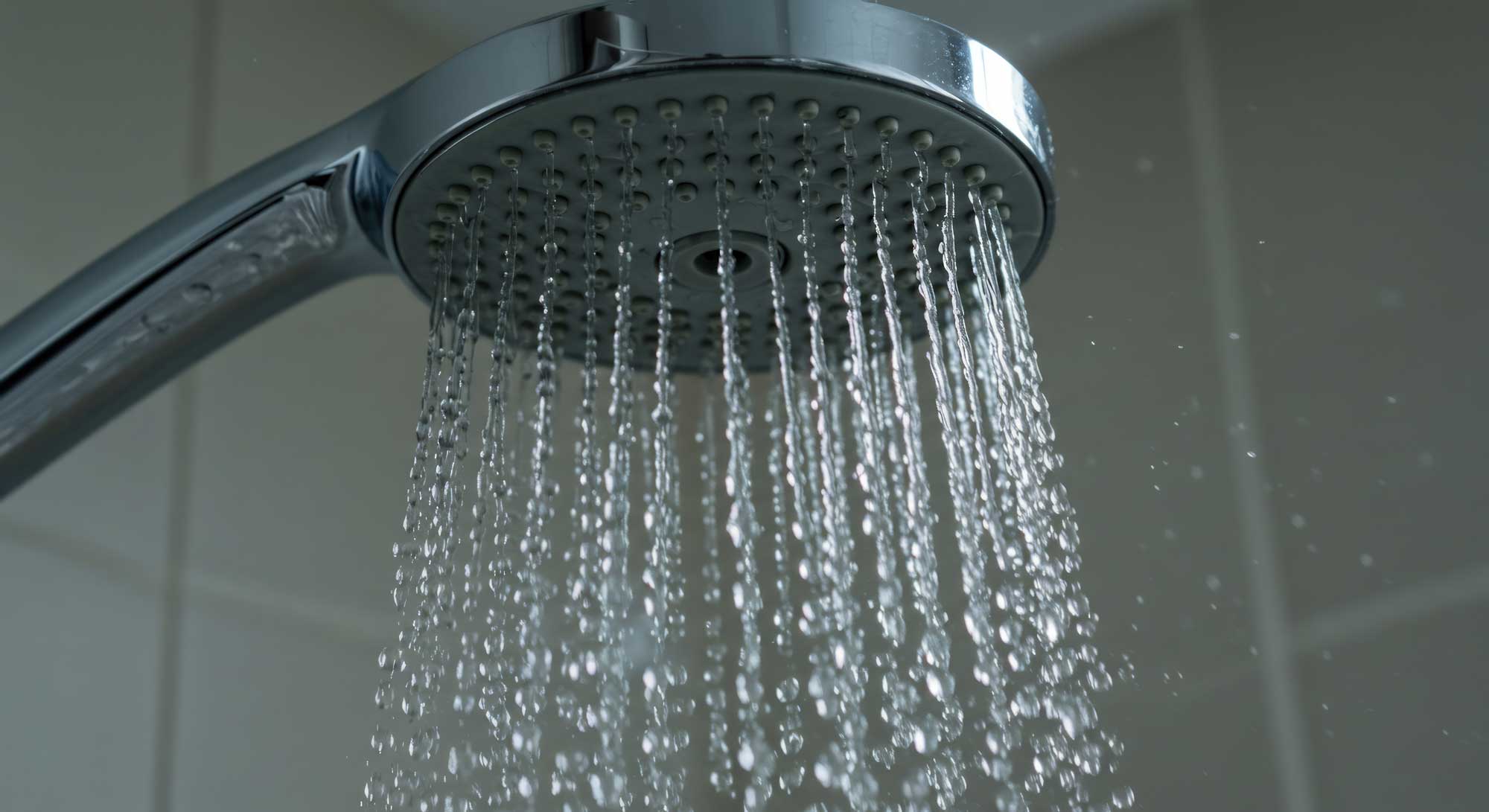
Is your shower more of a gentle trickle than a powerful blast? Here’s why your water pressure is rubbish and what you can actually do about it.
There are few things more disappointing in life than standing under a shower that barely manages a pathetic dribble whilst you’re covered in shampoo, freezing cold, and late for work. You imagined power showers and spa-like luxury. What you got was the water pressure equivalent of someone spitting at you from across the room.
Low water pressure is one of those problems that seems minor until you’re living with it every single day. Then it becomes absolutely maddening. Your shower’s useless. The bath takes 45 minutes to fill. The dishwasher won’t work properly. The washing machine takes forever. Even washing your hands feels like an exercise in patience.
The thing is, poor water pressure isn’t something you just have to live with. There are loads of solutions, from simple fixes you can do yourself through to professional installations that transform your water system completely. The trick is figuring out what’s actually causing the problem in your specific property, because the solution depends entirely on the cause.
This guide will walk you through everything you need to know about water pressure problems in UK homes – why they happen, how to diagnose the specific issue you’re dealing with, what the various solutions cost, and when you need to call in a professional plumber versus when you can sort it yourself. By the end, you’ll understand exactly what’s going on with your water system and what to do about it.
Understanding Water Pressure in UK Homes
Before we dive into problems and solutions, let’s quickly cover how water pressure actually works in your property. Bear with us – this isn’t as boring as it sounds, and understanding it makes everything else make sense.
Static vs. Dynamic Pressure
Static pressure is the pressure in your pipes when no water is flowing. Open your kitchen tap slightly and hold your thumb over it – you feel the static pressure pushing against your thumb.
Dynamic pressure (or flow rate) is what actually matters for daily use. This is the pressure when water’s flowing out of taps, showers, and appliances. You can have decent static pressure but terrible dynamic pressure if your pipes are too small or blocked.
What you actually care about: Dynamic pressure. That’s what determines whether your shower works or whether it takes an hour to fill the bath.
Mains Pressure vs. Tank-Fed Systems
UK homes use two main types of water system, and understanding which you have is crucial.
Mains pressure (modern standard): Water comes directly from the street mains to all your taps and appliances. Pressure depends on:
- Your water supplier’s mains pressure (1-4 bar typically)
- Distance from water main
- Pipe sizes and condition
- Height of property (upstairs has slightly less pressure)
- How many neighbours are using water simultaneously
Advantages: Generally good pressure, instant hot water with combi boilers, simpler system.
Tank-fed (older properties): Water fills a header tank in your loft, then gravity feeds down to taps and appliances. Pressure depends on:
- Height difference between tank and outlet (bigger height = more pressure)
- Tank size and fill rate
- Pipe condition and sizing
Advantages: Independent of mains pressure, less affected by neighbours’ water use.
Disadvantages: Poor pressure if tank isn’t high enough, useless for showers on upstairs floors.
How to tell which you have: Go into your loft. See a large water tank up there? You’re tank-fed. No tank? You’re mains pressure (or you have an unvented cylinder, which is still mains pressure).
This distinction is crucial because solutions differ completely depending on your system type.
What’s “Good” Water Pressure?
Let’s define what we’re aiming for:
Minimum acceptable pressure for:
- Taps and toilets: 0.5 bar
- Standard showers: 1.0 bar
- Power showers: 1.5 bar
- Combi boilers: 1.0 bar (some need 1.5 bar)
- Washing machines and dishwashers: 0.5-1.0 bar
Ideal pressure: 2-4 bar at mains supply point (reducing slightly at upper floors)
Flow rate matters too: Good pressure means nothing if your flow rate is terrible. Ideal flow rates:
- Kitchen tap: 15-20 litres per minute
- Bathroom tap: 10-15 litres per minute
- Shower: 10-15 litres per minute minimum (20+ for a proper power shower)
You can measure flow rate by timing how long it takes to fill a bucket. Fill a 10-litre bucket from your tap. If it takes 30 seconds, you’ve got 20 litres per minute. If it takes 2 minutes, you’ve got 5 litres per minute (rubbish).
Common Causes of Low Water Pressure
Right, your pressure is terrible. But why? Let’s diagnose the culprit.
Problem 1: Inadequate Mains Supply
Sometimes the fundamental issue is that your property simply doesn’t get good mains pressure from the street supply. This is common in:
Rural areas: You’re at the end of a long water main, possibly quite far from the pumping station. By the time water reaches you, pressure is naturally lower.
Older housing developments: Original water mains sized for 1950s usage (fewer appliances, lower demands) now serving modern homes with dishwashers, washing machines, multiple bathrooms, etc.
Properties on hills or at height: Water has to be pumped uphill. Higher properties naturally have lower pressure.
Shared supplies: Your property might share a supply pipe with neighbours. When they’re all showering and doing laundry, your pressure drops significantly.
How to identify this issue:
- Check pressure at your stopcock (where mains enters property)
- Compare with neighbours – if everyone has the same problem, it’s the mains supply
- Contact your water supplier and ask what pressure they deliver to your property
- If mains pressure at boundary is under 1 bar, that’s your problem
Solutions:
- Pressure pump installation (boosts pressure throughout property)
- Ask water supplier about upgrading supply (they might, but don’t count on it)
- Accept it and work with what you’ve got (cheapest option)
Problem 2: Undersized Pipework
Your Victorian or Edwardian property might have gorgeous period features, but the plumbing? Not so much. Older properties typically have 15mm supply pipes when modern standards call for 22mm or even 25mm.
Why pipe size matters:
Imagine trying to drink a thick milkshake through a normal straw versus a wide boba tea straw. Same concept. Smaller pipes = restricted flow.
15mm pipes (common in pre-1980 properties): Fine for single tap usage, terrible when multiple outlets are used. Modern dishwashers and power showers struggle.
22mm pipes (modern standard): Adequate flow for most domestic use. Supports multiple outlets simultaneously.
25mm pipes (ideal): Excellent flow for larger properties with multiple bathrooms.
How to identify pipe size issues:
- Pressure is fine with one tap running, drops significantly with multiple taps
- Visible pipework is 15mm (about the width of a marker pen)
- Property is pre-1980 and never been replumbed
- Shower pressure suffers when toilet is flushed
- Combi boiler struggles when other water is being used
Solutions:
- Replumb main supply in 22mm or 25mm pipe (expensive but permanent fix)
- Install pressure pump (compensates for undersized pipes)
- Live with it and avoid using multiple water outlets simultaneously (free but annoying)
Cost to replumb: £2,000-£6,000 depending on property size and accessibility.
Problem 3: Corroded or Furred-Up Pipes
Your pipes might be the right size, but after decades of use, they’re partially blocked with limescale, rust, or corrosion deposits. The internal diameter has shrunk significantly.
Hard water areas (South East England, East Anglia, East Midlands): Limescale builds up inside pipes over decades, significantly reducing flow. A 22mm pipe might effectively be 15mm internally after 40 years of limescale accumulation.
Old copper pipes: Internal corrosion creates rough surfaces that impede flow. Eventually, pipes can be almost blocked.
Galvanised steel pipes (ancient properties): Rust internally, severely restricting flow. These need replacing.
How to identify:
- Property is in a hard water area
- Pipes are original and 30+ years old
- Kettles and shower heads fur up quickly with limescale
- Pressure has gradually worsened over years
- Cutting into old pipes reveals significant internal deposits
Solutions:
- Descaling treatment (limited effectiveness)
- Chemical cleaning (moderately effective)
- Complete replumbing (expensive but permanent)
- Install water softener to prevent future buildup (doesn’t fix existing problems)
Why this is often missed: Pressure drops so gradually over decades that you don’t notice until you stay somewhere with good pressure and realise what you’re missing.
Problem 4: Faulty or Incorrect Pressure Reducing Valve
Some properties have pressure reducing valves (PRVs) fitted where mains water enters the property. They reduce high mains pressure (5-6 bar) down to safer levels (2-3 bar) to protect appliances and pipework.
Problems with PRVs:
Set too low: Plumber set it conservatively, giving you adequate pressure for basics but nothing for power showers.
Faulty: PRV has failed partially, restricting flow more than intended.
Unnecessary: Someone fitted one when mains pressure wasn’t actually excessive, artificially limiting your pressure.
Stuck: Deposits or wear have caused the valve to stick in a partially closed position.
How to identify:
- Find the PRV (usually near stopcock, looks like a valve with adjustment mechanism)
- Check if mains pressure before PRV is much higher than after
- Compare with neighbours who might not have PRVs
Solution:
- Adjust PRV to increase output pressure (sometimes just needs a screwdriver)
- Replace faulty PRV: £150-£350
- Remove PRV entirely if unnecessary (check with plumber first)
Problem 5: Partially Closed Valves
This sounds stupid, but honestly, it’s surprisingly common. Someone has partially closed a valve somewhere in your system, and you might not even know it exists.
Common culprits:
Main stopcock: Not fully opened after plumbing work or meter reading. Even 75% open significantly reduces pressure.
Isolation valves: Under sinks, behind toilets, at appliances. Previous owner or plumber closed them partially and never fully reopened.
Hidden valves: In airing cupboards, under stairs, in garages. Valves you didn’t even know existed.
How to check:
- Trace your water system and identify every valve
- Check each one is fully open (turn until it stops)
- Main stopcock should open anti-clockwise until it stops
- Test pressure after ensuring all valves fully open
Solution: Free! Just open the valves properly.
Why it happens: Plumber or meter reader closed valve for work, reopened it partially, forgot to open it fully. Or previous owner partially closed something and you never knew.
Problem 6: Tank-Fed System with Low Header Tank
If you’ve got a tank-fed system, physics determines your pressure. The higher the tank above your taps, the more pressure you get.
The physics:
Every metre of height between tank and tap gives you approximately 0.1 bar of pressure.
Example:
- Header tank is 3 metres above your shower
- You’ve got 0.3 bar pressure at the shower
- That’s useless for anything except filling a sink slowly
For an upstairs bathroom with tank in the loft, you might have just 1-2 metres height difference. That’s 0.1-0.2 bar. No wonder your shower is pathetic.
How to identify:
- You have a header tank in the loft
- Downstairs taps have better pressure than upstairs
- Shower pressure is terrible, especially upstairs
- Pressure is consistent regardless of neighbours’ water use
Solutions:
- Install shower pump for bathrooms (most common and cost-effective)
- Convert to mains pressure system (expensive)
- Install electric shower (uses less water, works on low pressure)
- Raise header tank height if possible (rarely practical)
Shower pump cost: £400-£1,200 installed
Problem 7: Leaks in the System
Hidden leaks in your pipework mean water is escaping before it reaches your taps, reducing pressure significantly.
Where leaks hide:
- Underground supply pipe between boundary and house
- Under concrete floors
- Behind walls
- In ceiling voids
- Under bathtubs and showers
How to identify possible leaks:
- Unusually high water bills
- Water metre constantly ticking even when nothing is using water
- Damp patches appearing with no obvious source
- Sound of running water when everything is turned off
- Pressure that used to be fine but has suddenly worsened
What to do:
- Turn off all water outlets in the property
- Check your water metre (if you have one)
- If metre is still moving, you’ve got a leak
- Call a plumber to investigate with leak detection equipment
Leak detection and repair: £200-£2,000 depending on location and severity.
DIY Diagnostics: Finding Your Specific Problem
Right, let’s work out what’s actually wrong with your system. Here’s a systematic approach.
Step 1: Check the Obvious First
The 5-minute check:
- Check your stopcock is fully open
- Find it (usually under kitchen sink)
- Turn it anti-clockwise until it stops
- Test pressure again
- Check isolation valves are fully open
- Under sinks, behind toilets
- Turn fully open
- Test pressure
- Clean your shower head
- Remove it and soak in descaler overnight
- Limescale might be blocking tiny holes
- Cheap and might fix everything
If pressure is still rubbish after this, move to deeper investigation.
Step 2: Measure Your Actual Pressure
You’ll need:
- A bucket (10 litres marked)
- A stopwatch
- A notepad
Test flow rate at different locations:
Kitchen tap:
- Place bucket under tap
- Turn on fully (cold water)
- Time how long to fill 10 litres
- Calculate: (10 × 60) ÷ seconds taken = litres per minute
Bathroom tap: Repeat same process
Shower: Repeat same process (might take ages if pressure is truly terrible)
What the results mean:
- 15-20 litres/minute: Excellent
- 10-15 litres/minute: Adequate
- 5-10 litres/minute: Poor but usable
- Under 5 litres/minute: Terrible, definitely needs attention
Step 3: Test at Different Times
Water pressure often varies depending on usage in your area.
Test pressure:
- 6am (before everyone’s morning shower)
- 8am (peak morning usage)
- 2pm (midday, lower usage)
- 6pm (evening peak)
- 10pm (after evening peak)
If pressure varies significantly: Your issue is shared mains supply or peak-time demand. Pressure pump or storage solutions help.
If pressure is consistently poor: Your issue is within your property’s system (pipework, valves, leaks).
Step 4: Compare with Neighbours
Knock on a few doors (or just chat when you see them). Ask if they have water pressure problems.
If neighbours have same problem: It’s the mains supply. Contact your water supplier (they might not fix it, but worth asking).
If only you have the problem: It’s specific to your property (pipework, valves, leaks, or your system type).
Step 5: Check Your System Type
Go into your loft:
See a large cold water storage tank? You’re tank-fed. Your pressure depends on height difference between tank and taps. This is probably why your upstairs shower is rubbish.
No tank in loft? You’re mains pressure. Your problem is either inadequate mains supply, undersized pipework, blocked pipes, or valves.
This distinction determines which solutions will work for you.
Solutions for Mains Pressure Systems
If you’re on mains pressure, here are your options, from cheapest to most expensive.
Solution 1: Check and Fix the Obvious (£0)
Before spending anything:
- Fully open all valves
- Clean shower heads and tap aerators
- Check for visible leaks and fix them
- Ensure stopcock is fully open
Sounds daft, but this solves the problem for some people. Worth checking first.
Solution 2: Pressure Accumulator (£300-£800)
An accumulator is basically a pressure vessel that smooths out pressure variations and can slightly boost pressure.
How it works: Small tank installed after your mains supply. Stores water at mains pressure. When you open a tap, it releases water quickly, maintaining pressure better.
Good for:
- Pressure that drops when multiple taps are used
- Combi boilers that struggle with fluctuating pressure
- Smoothing out pressure variations
Not good for:
- Fundamentally low mains pressure (can’t create pressure from nothing)
- Solving severe pressure problems
Installation cost: £300-£800 including parts and fitting.
Solution 3: Pressure Pump System (£500-£1,500)
A proper pressure pump actively boosts water pressure throughout your property.
How it works: Pump installed on incoming mains supply. Detects when you open a tap (pressure drop) and activates automatically. Boosts pressure to whatever level you set (typically 2-4 bar).
Types of pump:
Single-impeller pump (basic):
- Boosts pressure moderately
- Suitable for single bathroom properties
- Cost: £500-£800 installed
Multi-stage pump (better):
- Significant pressure boost
- Quieter operation
- Suitable for multiple bathrooms
- Cost: £800-£1,200 installed
Pump with accumulator (best):
- Combines pump with storage vessel
- Smoothest operation
- Handles multiple simultaneous outlets
- Cost: £1,000-£1,500 installed
Advantages:
- Boosts pressure throughout entire property
- Works automatically (no intervention needed)
- Relatively affordable compared to full replumbing
Disadvantages:
- Uses electricity (small amount)
- Requires maintenance (though minimal)
- Can be slightly noisy (though modern pumps are quiet)
- Won’t work during power cuts
Best for: Properties with adequate pipe sizing but insufficient mains pressure.
Solution 4: Replumb with Larger Pipes (£2,000-£6,000)
If your pipework is undersized (15mm when it should be 22mm), this is the permanent fix.
What’s involved:
- Replacing incoming supply pipe with 22mm or 25mm
- Often replacing pipework throughout property
- Potentially lifting floorboards and accessing walls
- Major disruption for several days
When this makes sense:
- Property needs complete plumbing overhaul anyway
- You’re renovating and have walls/floors open
- Pipes are old and corroded (killing two birds with one stone)
- You want a permanent fix without pumps
When it doesn’t:
- Your mains supply pressure is fundamentally low (larger pipes won’t help)
- Budget doesn’t stretch to it
- Disruption is unacceptable
Cost: £2,000-£6,000 depending on property size and accessibility. London typically 30-40% more expensive.
Solution 5: Upgrade Your Mains Supply (£1,500-£4,000)
In some cases, your supply pipe from the street main to your property is the bottleneck.
When this applies:
- Your supply pipe is old, undersized, or shared
- Good pressure at the main but poor at your boundary
- Water supplier confirms supply pipe is inadequate
What’s involved:
- Installing new larger supply pipe from street main to your property
- Requires water supplier coordination
- Often involves excavation across your front garden/drive
- Need road opening permits if crossing pavement
Water supplier responsibilities:
- They’re responsible for the main in the street
- You’re responsible for the pipe from their boundary stop valve to your property
- Some water companies offer upgrade schemes (check with yours)
Cost:
- Just your section: £1,500-£3,000
- Including water company section: £2,500-£4,000
- Some water companies subsidise this (worth asking)
Timeline: Usually 2-4 weeks from approval to completion.
Solutions for Tank-Fed Systems
If you’ve got a header tank in the loft, your options are different.
Solution 1: Install a Shower Pump (£400-£1,200)
This is the standard solution for tank-fed systems with poor shower pressure.
How it works: Pump installed near hot water cylinder or in loft. Connects between your stored water (hot and cold) and your shower. Activates automatically when shower is turned on. Boosts pressure significantly.
Types of shower pump:
Single-impeller pump (basic):
- Boosts one shower
- 1.5-2.0 bar boost
- Cost: £400-£700 installed
Twin-impeller pump (standard):
- Boosts hot and cold separately
- 2.0-3.0 bar boost
- Better performance
- Cost: £600-£900 installed
High-performance pump:
- 3.0-4.0 bar boost
- Can serve multiple outlets
- Quieter operation
- Cost: £800-£1,200 installed
Installation requirements:
- Minimum 1 metre head (tank height above shower)
- Negative head pumps exist if you don’t have height
- Surrey flange needed on hot water cylinder (small additional cost)
- Electrical supply (usually from lighting circuit)
Advantages:
- Transforms terrible shower into power shower
- Relatively affordable
- Quick installation (usually half a day)
- Can retrofit to existing system
Disadvantages:
- Only helps shower (not other taps)
- Uses electricity
- Requires maintenance
- Can be slightly noisy (though modern ones are quiet)
Best for: Properties with tank-fed systems wanting decent shower pressure.
Solution 2: Electric Shower (£300-£800)
Electric showers heat water instantly and work independently of your water system.
How it works: Connects directly to mains cold supply. Heats water electrically as it flows through. Doesn’t rely on stored hot water or pressure from height.
Advantages:
- Works with low pressure (minimum 0.7 bar usually)
- No hot water tank needed
- Independent of heating system
- Relatively cheap installation
Disadvantages:
- Flow rate limited by heating capacity
- Won’t give you a power shower experience
- Uses lots of electricity
- Hot water volume depends on incoming cold temperature (lukewarm in winter)
Cost:
- Basic electric shower: £100-£200
- Mid-range: £200-£400
- High-performance: £400-£800
- Installation: £200-£400 (needs electrician)
Best for: Budget-conscious solutions or situations where pressure can’t be improved.
Solution 3: Convert to Mains Pressure System (£3,000-£8,000)
This is the nuclear option – ripping out your tank-fed system and converting everything to mains pressure.
What’s involved:
- Installing unvented hot water cylinder (mains pressure)
- Removing header tanks from loft
- Replumbing to supply direct from mains
- Potentially upgrading incoming pipework
- Building regulations compliance
- Possible combi boiler installation instead
Advantages:
- Good pressure throughout property
- No header tanks taking up loft space
- Modern, efficient system
- Increases property value
Disadvantages:
- Very expensive
- Major disruption
- Requires good mains pressure to begin with
- Unvented cylinders need annual servicing
Cost: £3,000-£8,000 depending on property size and complexity.
When it makes sense:
- Full property renovation happening anyway
- Old boiler needs replacing (get combi instead)
- Multiple bathrooms needing good pressure
- Long-term property where investment is worthwhile
When to Call a Professional
Some water pressure problems you can diagnose and fix yourself. Others definitely need a plumber.
DIY-Friendly Fixes
You can probably handle:
- Opening valves fully
- Cleaning shower heads and tap aerators
- Checking for obvious leaks
- Basic pressure testing and diagnostics
- Adjusting PRV settings (if confident)
Call a Professional Plumber For
Definitely need a pro:
- Installing pressure pumps
- Replumbing any significant pipework
- Leak detection and repair
- Installing shower pumps
- Replacing pressure reducing valves
- Any work involving gas boilers
- Converting system types
Finding the right plumber:
Search “local plumber near me UK” on Trader Street to find experienced plumbers who specialise in water pressure solutions. Look for:
- Reviews mentioning pressure pump installations
- Experience with your type of system (tank-fed vs mains)
- Photos of previous pressure-related work
- Clear pricing for diagnostic visits
Questions to ask potential plumbers:
- “Have you dealt with similar pressure problems before?”
- “What do you think is causing my specific issue?”
- “What solutions would you recommend?”
- “What’s the cost breakdown for parts vs labour?”
- “How long will installation take?”
- “What’s the warranty on parts and labour?”
Expect to pay:
- Diagnostic visit: £80-£150
- Pressure pump installation: £500-£1,200
- Shower pump installation: £400-£900
- Replumbing: £2,000-£6,000
The Bottom Line: Don’t Suffer in Silence
Living with terrible water pressure is miserable. That pathetic shower every morning, waiting ages for the bath to fill, your washing machine taking forever – it all adds up to genuine daily frustration.
The good news? Water pressure problems are solvable. Yes, sometimes the solutions are expensive, but often they’re more affordable than you’d think. A shower pump installation might cost £600-£800 and transform your daily shower experience from miserable to brilliant. That’s money well spent for something you use every single day.
The sensible approach:
- Start with free fixes: Check valves, clean fixtures, look for obvious problems
- Diagnose properly: Understand whether it’s mains supply, pipework, system type, or leaks
- Get professional advice: Bring in a plumber to assess and recommend solutions
- Choose the right solution: Balance cost against permanence and effectiveness
- Get it installed properly: Use qualified plumbers, not cowboys
Don’t let anyone tell you “that’s just how it is in old houses” or “you’ll have to live with it.” Modern pressure pumps and shower pumps can transform even the worst water pressure into something perfectly usable. You don’t have to accept miserable showers and ages waiting for baths.
And remember: platforms like Trader Street connect you directly with local plumbers who specialise in water pressure solutions, without the platform fees that inflate costs on traditional directories. Read reviews, compare quotes, and find someone who’s solved exactly your type of problem before.
Your shower is one of life’s daily rituals. It should be pleasant, not an exercise in patience and disappointment. Get your water pressure sorted, and start enjoying proper showers again. You’ll wonder why you put up with rubbish pressure for so long.
Struggling with low water pressure? Connect with experienced local plumbers on Trader Street who specialise in pressure pump installations and water pressure solutions. Read reviews, compare quotes, and arrange consultations directly – transforming your water pressure without the platform fees.