
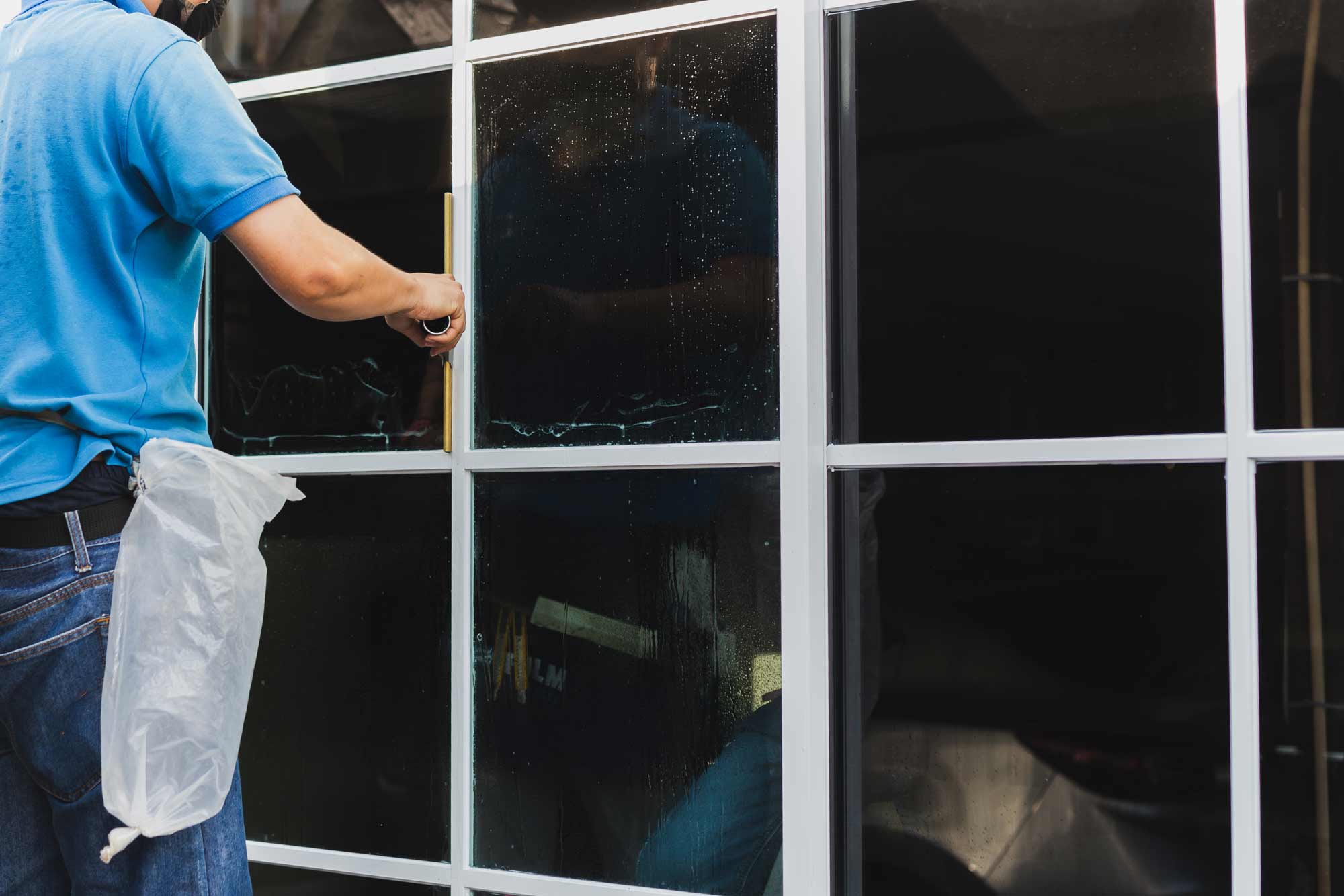
Clean windows transform how your home looks and feels, yet most people underestimate how filthy their windows actually are. Here’s everything you need to know about professional window cleaning – frequency, costs, methods, and finding reliable cleaners.
Stop for a moment and look at your windows. Really look at them.
Those streaks you’ve learned to ignore. The splattered rain marks that have accumulated over months. The dusty film that reduces natural light more than you realise. The corners where spiders have established permanent residence. The inexplicable sticky residue that resists your occasional half-hearted attempts with kitchen roll and washing-up liquid.
Here’s what you need to understand: genuinely clean windows make an enormous difference to your home. Not just aesthetically (though that’s significant), but practically. Clean windows allow 30-40% more natural light into your home. They make rooms feel larger, brighter, and more pleasant. They improve your view of the outside world. And they protect the glass itself from long-term damage caused by accumulated grime.
Yet most homeowners either never clean their windows professionally, or do so irregularly with poor results. The reason is simple: window cleaning is deceptively difficult. What looks straightforward – glass, cleaner, wipe – is actually quite skilled work. DIY attempts typically result in streaks, smears, and windows that somehow look worse than before you started.
Professional window cleaners make it look effortless because they have the right equipment, proper technique, and experience. They know about squeegee angles, the importance of pure water, how to deal with different glass types, and which products actually work versus which ones leave residue.
This comprehensive guide will explain why professional window cleaning matters, how often you actually need it, what you should pay (spoiler: it’s more affordable than you think), how to find reliable window cleaners, and what to expect from professional service.
Why Professional Window Cleaning Actually Matters
Let’s start with why this isn’t just vanity.
Natural Light and Wellbeing
Research on daylight and mental health is clear:
Natural light affects:
- Mood regulation (seasonal affective disorder exists for a reason)
- Sleep quality (natural light exposure helps regulate circadian rhythm)
- Productivity (people work better in naturally-lit spaces)
- Vitamin D production (sunlight through windows contributes)
- Overall sense of wellbeing
Dirty windows block 30-40% of natural light.
That’s substantial. Clean windows mean noticeably brighter rooms, especially in British climate where we’re not blessed with endless sunshine anyway.
Many people report better mood after window cleaning – not because they’re obsessed with cleanliness, but because their homes literally become brighter.
Property Appearance and Value
Clean windows dramatically improve how your home looks:
From outside: Dirty windows make entire property look neglected, regardless of how well-maintained everything else is. Clean windows signal care and attention.
From inside: Looking through clean windows feels like upgrading from standard to HD television. You hadn’t realised how much your view was compromised.
For property sales: Estate agents consistently report that clean windows improve viewing impressions significantly. It’s one of the cheapest improvements you can make before selling (£50-£150 for whole house) with potentially significant return on investment.
Glass Protection and Longevity
Windows are expensive to replace.
Standard double-glazed window: £300-£800 depending on size
Whole house window replacement: £5,000-£15,000+
Accumulated grime damages glass over time:
- Mineral deposits from rain etch into glass permanently if left too long
- Industrial pollution causes chemical damage
- Organic matter (bird droppings, tree sap) creates stubborn stains
- Hard water spotting becomes increasingly difficult to remove
Regular professional cleaning protects your investment by preventing permanent damage.
Health and Hygiene
Windows harbour surprising amounts of contaminants:
Exterior accumulates:
- Pollen (allergen for many people)
- Industrial pollutants
- Vehicle exhaust residue
- Bird droppings (can carry diseases)
- Mould and mildew (especially in damp climates)
Interior accumulates:
- Cooking grease vapours (kitchens)
- Condensation deposits
- Dust and skin cells
- Smoke residue (if anyone smokes indoors)
Regular cleaning removes these health hazards alongside improving appearance.
The Honest Truth About DIY Window Cleaning
Most people’s DIY window cleaning results are poor.
Why DIY typically fails:
- Wrong products (many leave residue that attracts more dirt)
- Poor technique (creates streaks and smears)
- Inadequate equipment (kitchen roll and washing-up liquid aren’t sufficient)
- Lack of access equipment (can’t properly clean upstairs exteriors)
- Water quality issues (hard water leaves spots)
- Time and effort (it’s surprisingly exhausting)
Professional results are noticeably superior to DIY attempts for most people.
How Often Should You Clean Your Windows?
Frequency depends on location, property type, and personal standards.
General Recommendations
UK window cleaning industry standards:
Residential properties, typical suburban/urban location:
- Exterior windows: Every 4-8 weeks
- Interior windows: Every 8-12 weeks (less exposure to elements)
Properties near busy roads or industrial areas:
- Exterior: Every 3-4 weeks (more pollution)
- Interior: Every 6-8 weeks
Rural properties:
- Exterior: Every 6-10 weeks (less pollution but more organic matter – pollen, dust, insects)
- Interior: Every 10-16 weeks
Coastal properties:
- Exterior: Every 3-4 weeks (salt deposits accelerate grime)
- Interior: Every 6-8 weeks
These are maintenance frequencies for keeping windows consistently clean, not letting them deteriorate then doing major clean.
Signs You Need Window Cleaning Now
Beyond scheduled cleaning, certain indicators mean it’s time:
Visible dirt accumulation: If you can see grime, it’s definitely time.
Reduced natural light: Rooms feel darker than they should.
Streaks or water marks: Previous rain has left obvious marks.
You can’t see through them clearly: The view is noticeably compromised.
Preparing for event or guests: Clean windows create excellent impression.
Seasonal changes: After winter (accumulated grime), after spring (pollen), after autumn (leaves and organic debris).
Before selling property: Essential preparation for viewings.
Seasonal Considerations
Different seasons bring different challenges:
Spring:
- Heavy pollen season
- Frequent rain
- Windows get dirty quickly
- Traditional “spring cleaning” season (good time for thorough clean)
Summer:
- Insect marks and debris
- Less frequent rain (dirt accumulates)
- Good weather for cleaning (dries quickly)
- Best time for DIY if attempting it
Autumn:
- Leaves and organic matter
- Mould growth from damp weather
- Condensation begins (interior windows)
- Clean before winter darkness sets in
Winter:
- Salt spray (roads and coastal areas)
- Heavy condensation (interior windows)
- Challenging weather for cleaning
- Less frequent cleaning acceptable (except interiors with condensation)
Most homeowners find 4-6 window cleans annually sufficient – roughly every 8-10 weeks.
Professional Window Cleaning Costs
What should you actually pay in 2025?
National Average Costs
Pricing varies significantly by region, property size, and access:
London and South East:
- Small house/flat (10-15 windows): £40-£80
- Medium house (16-25 windows): £60-£120
- Large house (26-40 windows): £90-£180
- Very large house (40+ windows): £150-£300+
Major Cities:
- Small property: £35-£65
- Medium house: £50-£95
- Large house: £75-£150
- Very large house: £120-£250
Other Regions:
- Small property: £30-£55
- Medium house: £40-£80
- Large house: £60-£120
- Very large house: £100-£200
These are typical ranges for standard access properties (ground and first floor accessible with ladder or pole).
What Affects Window Cleaning Prices?
Several factors influence cost:
Number of windows: Obviously, more windows cost more. Most cleaners count individual openable windows, not panes.
Property height:
- Ground floor only: Base rate
- Ground + first floor: Standard rate
- Two/three storeys: +20-40% (requires longer ladders or pole systems)
- Above three storeys: Specialist access required (significantly more expensive)
Access difficulty:
- Easy front/back access: Base rate
- Difficult access (steep gardens, obstacles): +15-30%
- Restricted access (need to go through property): +15-25%
- Gated communities (parking/access issues): +10-20%
Window condition:
- Recently cleaned/maintained: Base rate
- Moderately dirty: Base rate
- Very dirty (years of neglect): +20-50% for first clean
- Paint or builder’s residue: Quoted separately (specialist work)
Type of clean:
- Exterior only: Base rate
- Interior + exterior: Typically +30-50%
- Frames and sills included: Usually standard
- Conservatory: Often quoted separately (£30-£80 additional)
Frequency:
- One-off: Base rate
- Regular contract (monthly/bi-monthly): Often 10-20% discount
Additional services:
- UPVC frame cleaning: +£10-£30
- Conservatory roof: +£40-£100
- Gutter clearance: +£40-£100
- Fascia cleaning: +£30-£80
Per-Window vs. Whole-Property Pricing
Window cleaners use different pricing models:
Per-window pricing:
- Straightforward: £2-£6 per window depending on region and size
- Good for small jobs or specific windows only
- Easier to understand initially
Whole-property pricing:
- Quote for entire property based on size and complexity
- Usually better value for full service
- More common for regular contracts
- Simpler (don’t need to count windows)
Most established window cleaners prefer whole-property pricing for regular work, per-window for one-offs.
Regular Contract vs. One-Off Pricing
Big difference between contracted regular cleaning and ad-hoc service:
One-off clean:
- £60 for medium house
- Cleaner doesn’t know whether you’ll use them again
- Full rate applies
Regular contract (e.g., every 8 weeks):
- £45-£50 for same house
- Cleaner has predictable income
- Windows stay cleaner (easier maintenance)
- Better value for you
If you’ll use window cleaner regularly, contract saves significant money (typically 15-25% over one-off rates).
DIY Costs (For Comparison)
If attempting DIY window cleaning:
Equipment investment:
- Squeegee: £8-£20
- Extension pole: £15-£40
- Bucket: £5
- Proper window cleaning solution: £5-£10
- Microfibre cloths: £5-£10
- Ladder (if don’t own): £50-£150
- Total: £88-£235
Time investment:
- Small property: 2-3 hours
- Medium house: 3-5 hours
- Large house: 5-8 hours
Result quality:
- Usually inferior to professional (unless you develop skill)
- Risk of streaks and smears
- Safety concerns (ladder work)
For most homeowners, professional cleaning offers better value when time and result quality are factored in.
Types of Window Cleaning Methods
Understanding methods helps you know what you’re paying for.
Traditional Method (Squeegee and Applicator)
What it is: Windows washed with cleaning solution using applicator (like a sponge on a handle), then dried with squeegee blade.
The process:
- Mix cleaning solution (water + detergent)
- Wet window with applicator
- Squeegee off in overlapping strokes
- Detail edges with cloth
- Dry sills
Advantages: ✓ Excellent results when done properly (completely streak-free)
✓ Works on very dirty windows
✓ Immediate dry finish
✓ Good for interior windows
✓ No equipment running costs (just solution)
Disadvantages: ✗ Height limited (ladders required for upper floors)
✗ Weather dependent (can’t work in strong wind or heavy rain)
✗ Slower than water-fed pole
✗ Safety concerns (ladder work)
✗ Can’t reach awkward windows easily
Cost: Usually mid-range pricing
Best for:
- Low-rise properties (up to first floor)
- Interior window cleaning
- Properties where access allows ladder use
- When complete dryness is required
This is traditional window cleaning most people imagine – person up ladder with bucket and squeegee.
Water-Fed Pole System (Pure Water)
What it is: Purified water pumped through long telescopic poles with brush heads. Windows scrubbed with pure water then left to dry naturally.
The process:
- Pure water (filtered to remove all minerals) pumped through pole
- Brush head scrubs window while water flows
- Rinse thoroughly
- Leave to dry naturally (pure water dries without spots)
- Usually cleaned from ground level
Advantages: ✓ Very safe (ground-level work, no ladders)
✓ Can reach very high windows (poles extend to 60+ feet)
✓ Fast (quicker than traditional method)
✓ Environmentally friendly (pure water only, no chemicals)
✓ Excellent for regular maintenance
✓ Frames and sills cleaned simultaneously
Disadvantages: ✗ Initial investment in equipment (expensive for homeowner, but cleaner’s cost)
✗ Windows take time to dry (can look streaky until fully dry)
✗ Less effective on very dirty windows (first clean may need traditional method)
✗ Water marks can occur if water isn’t pure enough
✗ Not suitable for interior cleaning
Cost: Often slightly cheaper than traditional (cleaner works faster)
Best for:
- Properties above single storey
- Regular maintenance cleaning
- Difficult access properties
- Exterior cleaning
- Environmentally conscious customers
This is increasingly common for exterior window cleaning, especially on taller properties.
The Drying Question
Important difference between methods:
Traditional squeegee: Windows dry immediately (squeegee removes water). You can inspect results straight away.
Water-fed pole: Windows need 15-30 minutes to dry naturally. They may look streaky initially but should dry perfectly clear.
Some customers dislike waiting for water-fed pole windows to dry, but results are excellent once dry. Others prefer it (no chemicals, safer, faster service).
Interior vs. Exterior Window Cleaning
Most window cleaning quotes are exterior only unless specified.
Exterior cleaning:
- Outside face of windows
- Frames and sills usually included
- Majority of visible dirt
Interior cleaning:
- Inside face of windows
- Usually done less frequently (less exposure to elements)
- Typically costs 30-50% extra
- Always traditional method (water-fed poles impractical indoors)
For most homes, regular exterior cleaning with occasional interior is cost-effective approach.
Finding and Choosing Reliable Window Cleaners
Not all window cleaners are equal. Here’s how to find good ones.
Using Trader Street to Find Window Cleaners
Search for window cleaning specialists in your area.
Essential questions to ask:
“What method do you use – traditional squeegee or water-fed pole?” Both are fine, but knowing helps set expectations (pole method windows need drying time).
“Do you provide regular service or one-off only?” Regular service usually better value. Some cleaners don’t take one-offs.
“Does your price include interior windows, or exterior only?” Clarify to avoid surprises. Most quotes are exterior only.
“Are frames and sills included?” Should be, but confirm.
“What happens if I’m not satisfied?” Good cleaners return and rectify if you’re genuinely unhappy.
“How do you handle payment?” Many still prefer cash (traditional approach). Some take bank transfer. Few take cards. Clarify before booking.
“Are you insured?” Essential. Accidents happen (broken glass, damaged frames). Insurance protects both parties.
Red Flags When Hiring
Warning signs of unreliable window cleaners:
No fixed appointment system: “I’ll come by sometime this week” is unprofessional. You should know when they’re coming.
Dramatically cheap pricing: If quote is 50% below market rate, quality will reflect it.
Vague about method or process: Professional cleaners explain their approach clearly.
No insurance: Unacceptable. Accidents happen; you need protection.
Pressure tactics: Door-to-door window cleaners using aggressive sales tactics often deliver poor service.
No reviews or references: Every established window cleaner should have reviews.
Won’t provide written quote: Verbal quotes can mysteriously increase.
Green Flags to Look For
Indicators of reliable window cleaners:
Clear scheduling: “I clean your street every X weeks on Wednesdays” shows organisation.
Transparent pricing: Written quote with clear scope (what’s included, what’s extra).
Professional equipment: Obviously well-maintained ladders, proper water-fed pole system, or quality traditional tools.
Good communication: Responds to messages promptly, professional manner.
Insurance certificate available: Willingness to provide proof of insurance.
Regular customer base: Mention of “my round” or “my regular customers” indicates established business.
Reviews mentioning reliability: “Always turns up on time,” “hasn’t missed a clean in two years,” etc.
Membership in professional body: Federation of Window Cleaners (FWC) membership shows commitment (though not essential).
Understanding “The Round” System
Many window cleaners work on “rounds”:
How it works:
- Cleaner has established route covering specific streets/areas
- Visits each property on regular schedule (e.g., every 8 weeks)
- Cleans on specific day/time (you may or may not be home)
- Leaves note requesting payment or collects on next visit
Advantages for you:
- Don’t need to remember to book (happens automatically)
- Consistent service
- Usually better pricing (regular contract rates)
- Convenient (often don’t need to be home)
How to join a round:
- Ask local window cleaners if they have capacity on their round
- Expect to be added when convenient for their schedule
- Usually requires committing to regular service
Many homeowners prefer this arrangement – window cleaning just happens regularly without need to think about it.
What to Expect from Professional Window Cleaning
You’ve booked your window cleaner. What actually happens?
Before the Cleaner Arrives
Your preparation (minimal):
For exterior only cleaning:
- Nothing required really
- Move potted plants blocking windows if possible
- Ensure cleaner can access all sides of property
For interior cleaning:
- Clear window sills of items
- Move curtains/blinds aside
- Provide access to all rooms
- Secure pets
Most window cleaners accustomed to working around minor obstacles.
During the Clean
What happens:
Traditional method:
- Cleaner sets up ladder securely
- Works systematically round property
- Typically 10-30 minutes for average house
- You’ll hear them working but won’t disturb you
Water-fed pole:
- Cleaner works from ground level
- Brush head scrubs each window thoroughly
- Rinses with pure water
- Moves round property systematically
- Usually 15-40 minutes for average house
Most window cleaning happens with minimal customer interaction – especially for exterior-only work.
After the Clean: Inspection
Check results:
For traditional method:
- Inspect immediately (dry instantly)
- Check for streaks or missed spots
- Look at corners and edges
For water-fed pole:
- Give 15-30 minutes to dry completely
- Don’t judge while still wet (may look streaky)
- Once dry, should be perfectly clear
If issues:
- Point out to cleaner immediately if still present
- Good cleaners rectify on the spot
- Take photo if cleaner has left and contact them
For regular service:
- Initial clean might not be perfect (learning your windows)
- Results usually improve from second clean onwards
Payment
Window cleaning payment varies:
Cash on completion: Traditional approach. Many window cleaners prefer cash.
Pay on next visit: Some leave note requesting payment, collect next time.
Bank transfer: Increasingly common. Cleaner provides details via text/note.
Standing order: For regular service, some cleaners accept monthly standing orders.
Card payment: Rare for window cleaners (most too small to justify card machine).
Clarify payment method when booking to avoid awkwardness.
Common Window Cleaning Myths
Let’s address frequent misconceptions.
“Window cleaning in rain is pointless”
Myth: Rain undoes window cleaning immediately.
Reality: Rain is just water (usually cleaner than you think). The dirt that makes windows look grimy is from pollution, pollen, dust – not clean rain.
Professional window cleaners often work in light rain. Properly cleaned windows that get rained on still look much better than dirty windows.
What does damage results: Heavy rain before windows fully dry (water-fed pole method), or rain mixed with heavy pollution.
“Newspaper and vinegar is best method”
Old wives’ tale: Newspaper and vinegar solution creates streak-free windows.
Reality: This worked decades ago when newspaper ink formulation was different. Modern newspaper ink can leave marks. Vinegar is decent cleaner but not as effective as proper window cleaning solution.
Professional squeegee technique with proper solution delivers superior results.
“Window cleaners water down their solution to save money”
Myth: Cleaners use barely-diluted water to cut costs.
Reality: Proper window cleaning solution is heavily diluted (typical ratio 1:100 or more). Using too much soap actually creates more streaks and residue.
Water-fed pole uses pure water only (no solution at all). The purification process is the “product” they’re using.
“Clean windows attract birds to fly into them”
Myth: Cleaner windows cause bird strikes.
Reality: Birds fly into windows regardless of cleanliness. They see reflection of sky/trees, not the glass itself. Some evidence suggests dirty windows might actually increase strikes (distorted reflections confuse birds more).
If bird strikes are concern: Consider window film or decals (nothing to do with cleaning frequency).
“I can clean windows just as well as professionals”
Sometimes true, usually false.
If you have:
- Proper equipment (good squeegee, extension pole, quality solution)
- Technique knowledge (squeegee angles, overlapping strokes)
- Time and patience
- Safe ladder practice
Then yes, you can achieve similar results.
But most people lack one or more of these, resulting in streaky windows and wasted effort.
Professionals make it look easy because they do it daily. They’ve developed technique through repetition.
“Window cleaning is expensive for what it is”
Perception issue:
“£60 for 30 minutes work? That’s £120 per hour!”
Reality of cleaner’s costs:
- Travel time between jobs (unpaid)
- Equipment investment and maintenance
- Insurance (£300-£600 annually)
- Fuel costs
- Business overhead
- Weather cancellations (lost income)
- Time spent finding customers
Cleaner’s actual hourly rate after expenses: £15-£25 typically.
You’re paying for expertise, equipment, insurance, and convenience – not just time on your property.
Special Window Cleaning Situations
Some circumstances require specific approaches.
Conservatory Cleaning
Conservatories present unique challenges:
Roof panels:
- Difficult to access
- Accumulate moss, algae, bird droppings
- Can’t use ladder (can’t put weight on conservatory)
- Water-fed pole ideal
- Often quoted separately: £40-£100
Large glass areas:
- Many panes to clean
- Takes significantly longer
- Usually costs more than equivalent house windows
UPVC frames:
- Need cleaning alongside glass
- Can discolour if neglected
- Usually included but confirm
Most window cleaners happy to clean conservatories but expect additional cost.
Post-Construction Window Cleaning
After building work or renovations:
Windows covered in:
- Cement splatter
- Paint overspray
- Plaster residue
- Builder’s dust
- Adhesive from protective film
This requires specialist treatment:
- Not standard window cleaning
- May need scraping (risk of scratching)
- Specialist products
- Significantly more time
- Quoted separately: £80-£300+ depending on severity
Tell cleaner it’s post-construction – this isn’t regular window cleaning pricing.
Period Property Windows
Listed buildings and period properties:
Considerations:
- Single-glazed windows (more delicate)
- Wooden frames (need different products than UPVC)
- Sometimes leaded/stained glass (specialist care required)
- Architectural features (more time-consuming)
- Conservation area rules (may restrict equipment)
Find window cleaner experienced with period properties – they understand the requirements.
High-Rise/Apartment Buildings
Properties above third floor:
Access methods:
- Abseil from roof (specialist work)
- Cherry picker/platform (very expensive)
- Internal access (cleaners work from inside)
- Building management contracts
Individual flats in high buildings: Usually exterior windows cleaned as part of building management service. Interior windows either DIY or hire cleaner for interior only.
Cost: Significantly higher than low-rise (£8-£15 per window interior cleaning typical).
Maintaining Windows Between Professional Cleans
Professional cleaning gives you clean baseline. Maintain it with minimal effort.
Quick Interior Maintenance
Between professional cleans, maintain interior windows:
Light cleaning every 2-3 weeks:
- Microfibre cloth dampened with water
- Wipe away fingerprints and smudges
- Quick buff with dry cloth
- 5-10 minutes for whole house
This keeps interior windows looking good without full professional clean.
Dealing with Condensation
British homes often suffer condensation:
Daily wiping:
- Wipe condensation off windows each morning (bathroom, bedrooms)
- Use squeegee or cloth
- Prevents mould growth and water damage
Improve ventilation:
- Open windows briefly daily
- Use extractor fans
- Consider dehumidifier (bedrooms, bathrooms)
Condensation creates environment for mould which is harder to remove later.
When to Clean Yourself vs. Call Professional
DIY appropriate for:
- Interior windows (ground floor)
- Small properties (can complete in reasonable time)
- Light maintenance between professional cleans
- If you have proper equipment and technique
Call professional for:
- Exterior windows above ground floor
- Full property cleaning
- When you want streak-free results
- If you lack safe access equipment
- When time is limited
Realistic approach: Professional exterior cleaning every 8-12 weeks, DIY interior maintenance every 2-4 weeks.
Making Your Decision
You now understand window cleaning comprehensively: importance, costs, methods, and expectations.
Professional window cleaning makes sense if: ✓ You have windows above ground floor (safety)
✓ You value your time (3-5 hours DIY vs professional service)
✓ You want streak-free results (technique matters)
✓ Your property needs regular maintenance (every 8-12 weeks)
✓ You’re preparing to sell (excellent investment)
✓ You notice reduced natural light (windows are dirtier than you think)
The investment is modest:
- Average house: £40-£80 per clean
- Every 8-10 weeks: £240-£480 annually
- Significant quality of life improvement
- Protects windows from permanent damage
- Increases natural light by 30-40%
For most homeowners, professional exterior cleaning 4-6 times yearly combined with light interior maintenance delivers excellent results at reasonable cost.
Browse window cleaning specialists on Trader Street today. Look for cleaners with regular rounds in your area (better value), check reviews mentioning reliability and quality results, ask about method used (traditional vs. water-fed pole), and clarify pricing (interior/exterior, frames included).
Get quotes from 2-3 cleaners. Choose based on reliability, insurance, professionalism, and value – not just lowest price.
Clean windows genuinely transform how your home looks and feels. Natural light flooding in, clear views, brighter rooms. It’s one of the simplest, most affordable home improvements you can make.
Frequently Asked Questions
How much does window cleaning cost?
Small property (10-15 windows): £30-£80; Medium house (16-25 windows): £40-£120; Large house (26-40 windows): £60-£180. Varies by region (London higher, other areas lower), whether interior included, and access difficulty. Regular contract rates typically 15-25% cheaper than one-off cleans.
How often should I have windows cleaned professionally?
Exterior windows: Every 4-8 weeks for typical properties (more frequently near busy roads or coast, less frequently in rural areas). Interior windows: Every 8-12 weeks. Most homeowners find 4-6 full cleans annually sufficient (roughly every 8-10 weeks).
Can window cleaners work in rain?
Yes, light rain doesn’t prevent window cleaning. Rain is relatively clean water; the dirt making windows grimy is from pollution, pollen, and dust. Properly cleaned windows rained on still look much better than dirty windows. Heavy rain may be avoided (makes work difficult), but light rain is fine.
What’s the difference between traditional and water-fed pole cleaning?
Traditional uses squeegee and cleaning solution (immediate dry finish, works well on very dirty windows). Water-fed pole uses purified water and long pole from ground level (safer, reaches high windows, needs 15-30 minutes to dry naturally). Both deliver excellent results; water-fed pole increasingly common for exterior cleaning.
Does window cleaning price include interior and exterior?
Most quotes are exterior only unless specified. Interior cleaning typically costs 30-50% additional. Always clarify when getting quote. Many homeowners have exterior cleaned regularly (every 8 weeks) and interior less frequently (every 16-24 weeks).
Are window cleaners insured?
Reputable professional window cleaners carry public liability insurance. Always ask for proof. Insurance protects against accidental damage (broken glass, damaged frames, property damage). Never hire uninsured window cleaner – accidents happen and you need protection.
Can I clean windows myself as well as professionals?
Possible but unlikely for most people. Professional results require proper equipment (good squeegee, extension pole, quality solution), technique knowledge (squeegee angles, overlapping strokes), safe access to upper windows, and practice. Most DIY attempts result in streaks. Interior windows easier; exterior windows above ground floor best left to professionals.
How long does professional window cleaning take?
Small property: 10-20 minutes; Medium house: 20-40 minutes; Large house: 40-90 minutes. Water-fed pole usually faster than traditional method. Times are for exterior only; interior adds 50-100% more time. Very dirty windows (first professional clean after years) take longer.
Do I need to be home during window cleaning?
For exterior-only cleaning, no. Most window cleaners work without homeowner present. For interior cleaning, yes (they need property access). Many window cleaners on regular rounds clean whilst you’re at work, leaving note requesting payment.
Why do water-fed pole cleaned windows look streaky at first?
They’re still wet. Pure water takes 15-30 minutes to dry naturally. Windows may look streaky while drying but should be perfectly clear once dry. Don’t judge results until completely dry. If still streaky when dry, contact cleaner – water may not have been pure enough.
Ready for genuinely clean windows? Browse cleaning specialists on Trader Street today – compare traditional and water-fed pole services, read reviews mentioning reliability and quality results, and connect with professionals who’ll transform your windows from grimy to crystal clear, flooding your home with 30-40% more natural light.